



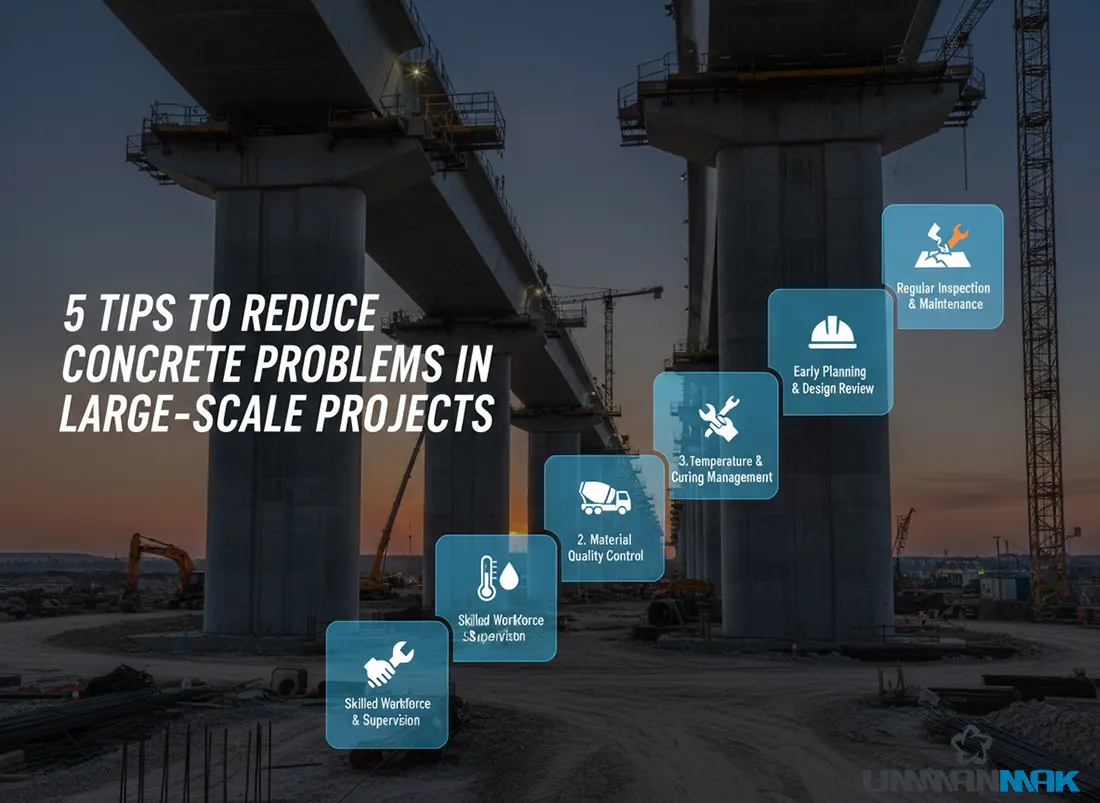
Concrete is a fundamental element in large construction projects such as infrastructure works, bridges, and industrial complexes.
As project size and complexity increase, the risk of concrete-related issues also rises—potentially affecting schedules, costs, and even structural safety.
In this article, we highlight five practical tips to help contractors and engineers minimize concrete problems and ensure consistent quality in large-scale projects.
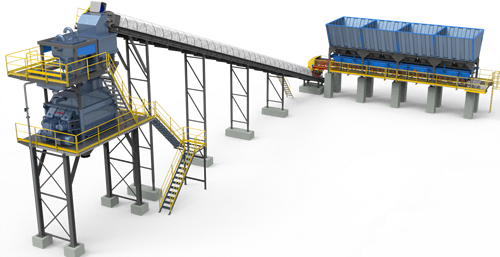
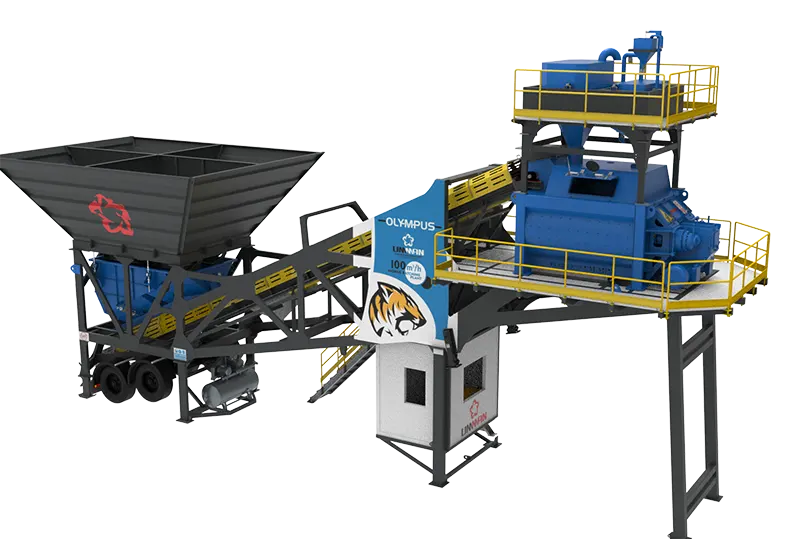
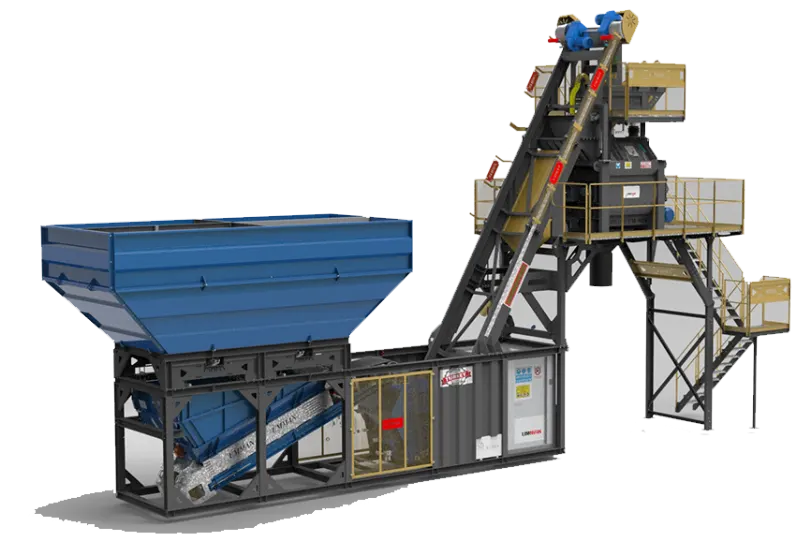
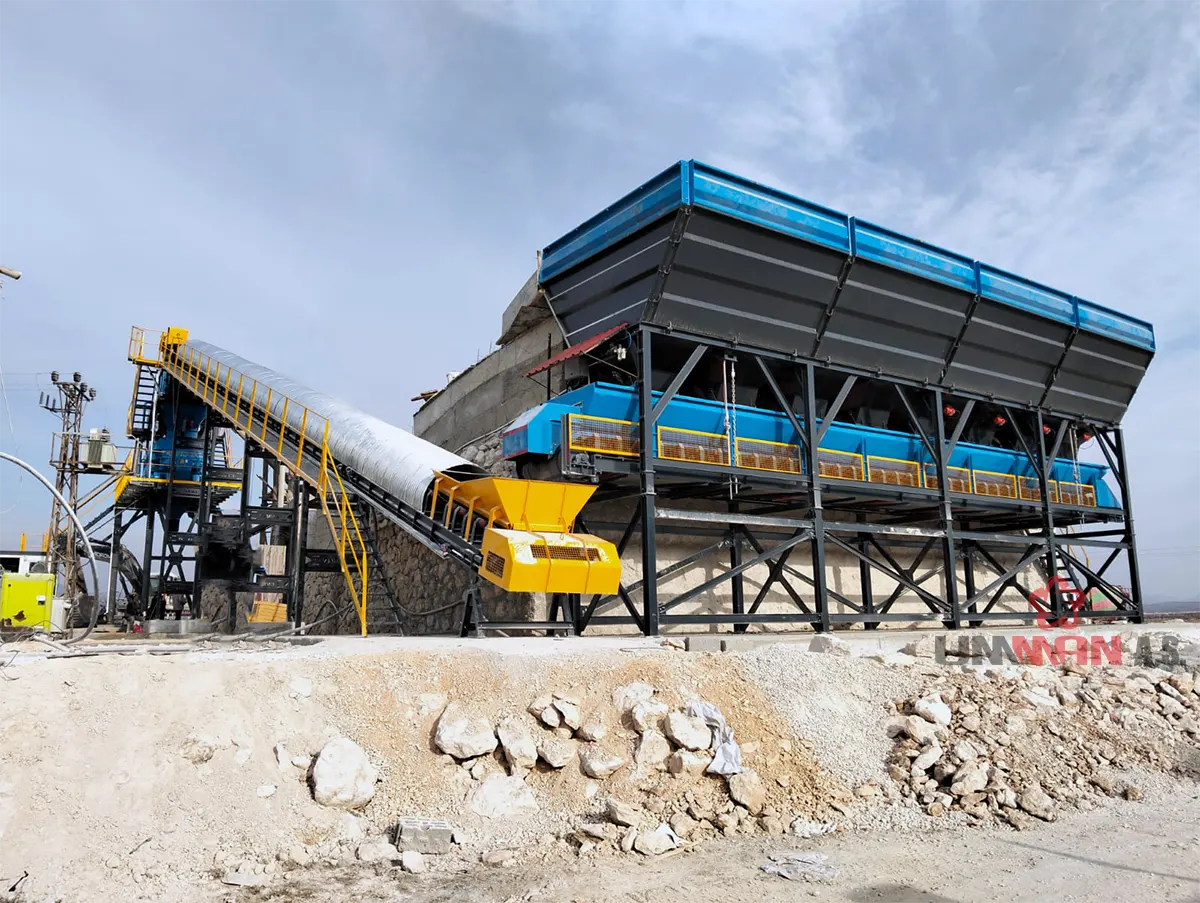
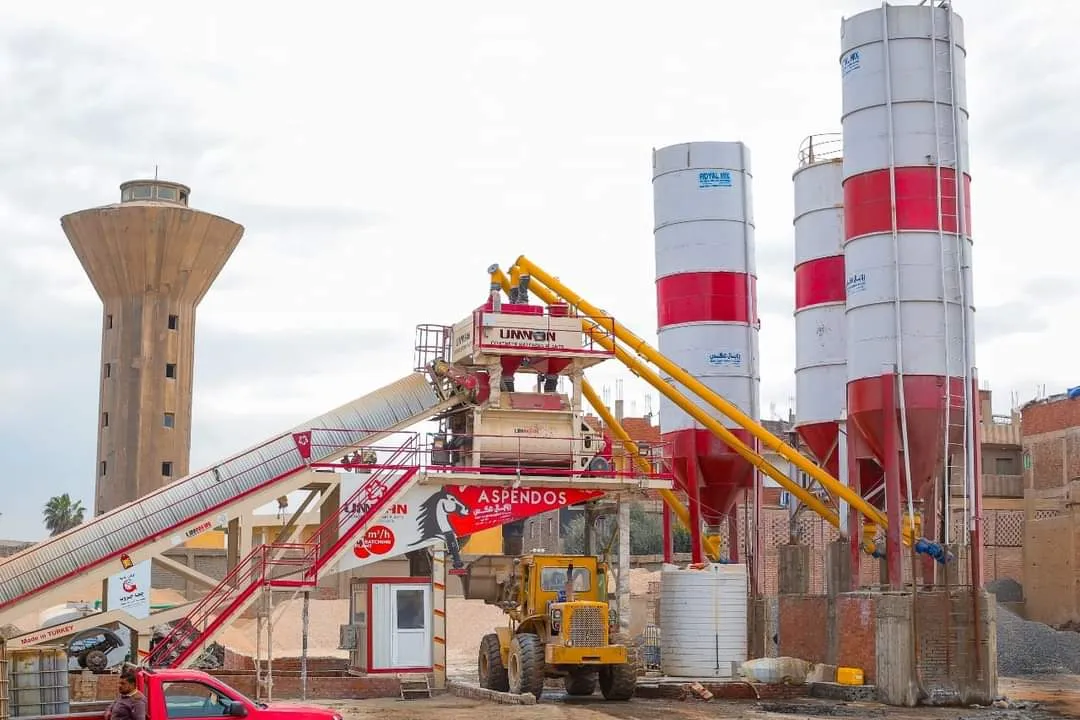
1️⃣ Choose a High-Quality Concrete Batching Plant with Precise Control Systems
Many concrete problems start at the production stage.
Using a batching plant without accurate weighing and control systems often leads to inconsistent mix quality.
✔ Solution:
Select a concrete batching plant equipped with advanced PLC & SCADA systems to precisely control material proportions and continuously monitor the production process.
2️⃣ Strictly Follow the Approved Concrete Mix Design
Uncontrolled changes to the concrete mix—such as adding extra water or altering material ratios—can result in:
- Reduced concrete strength
- Early cracking
- Material segregation
✔ Solution:
Strictly adhere to the approved mix design and make changes only after proper technical evaluation and approval.
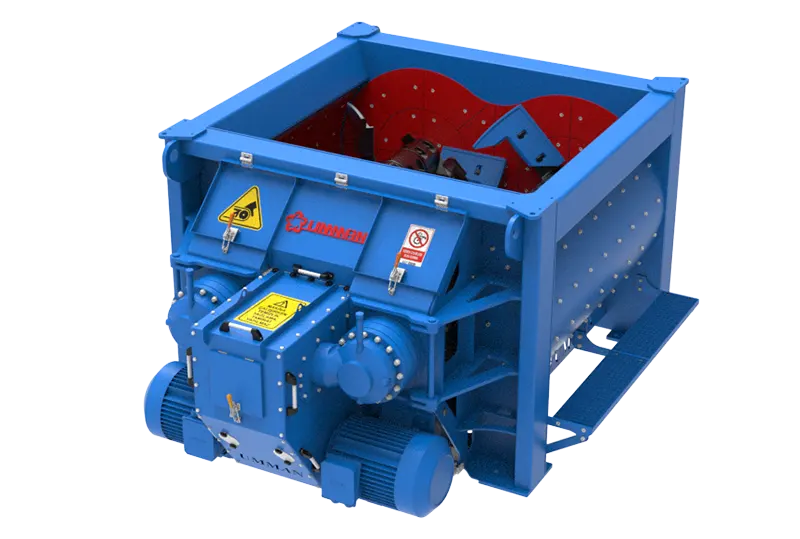
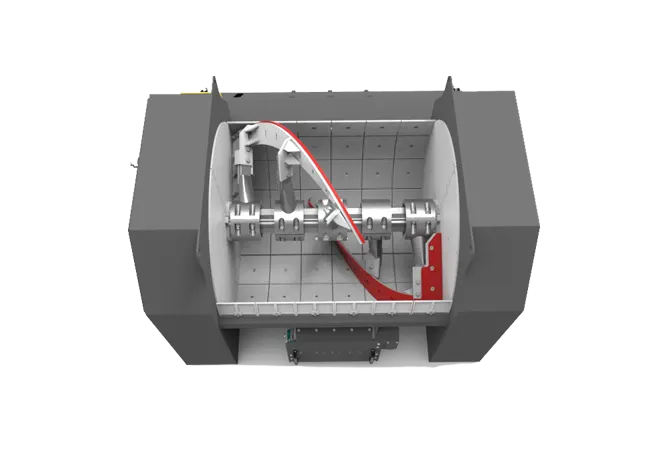
3️⃣ Ensure Homogeneous Mixing Using High-Efficiency Mixers
Poor mixing is one of the most common causes of structural defects in large-scale projects, especially when producing high volumes of concrete.
✔ Solution:
Use high-efficiency mixers such as Twin Shaft Mixers, which ensure fast and uniform mixing in every batch.
4️⃣ Control Operating and Environmental Conditions
High temperatures, humidity, and long transportation times have a direct impact on concrete workability and quality.
✔ Solution:
- Cool water and aggregates in hot climates
- Minimize transportation time from plant to site
- Use appropriate admixtures based on environmental conditions
5️⃣ Continuous Training and On-Site Quality Monitoring
Even with advanced equipment, human factors remain critical to concrete quality.
✔ Solution:
- Provide regular training for operators and site personnel
- Conduct on-site quality tests (slump tests, compressive strength tests)
- Record and analyze test results to continuously improve performance
🏁 Conclusion
Reducing concrete problems in large-scale projects does not depend on a single factor.
It requires an integrated approach that starts with selecting the right batching plant,
continues with precise control and homogeneous mixing,
and ends with environmental management and quality supervision on site.
Investing in these areas not only reduces concrete issues
but also helps accelerate project execution, lower costs, and improve overall construction quality.
✨ Final Note:
In major construction projects, concrete quality is not an option—it is a necessity for safety, durability, and long-term success.
Benzer Yazılar

How Concrete Quality Affects the Lifespan of Buildings
Concrete is the core material of most modern structures—from residential buildings to bridges and major…
How to Choose the Right Concrete Batching Plant for Your Project? A Step-by-Step Practical Guide
Introduction Choosing the right concrete batching plant is one of the most critical decisions that…
Concrete Batching Mixer Types
Concrete batching mixers play an important role in the construction industry. In this article, we will…
How Does a Concrete Batching Plant Work?
Concrete Plant Working System, How Does a Concrete Plant Work? Concrete batching and mixing equipment…